Mapping Loyalty Cycles: Cashback Structures Fueling Extended Play in Regulated Mobile Jackpot Environments
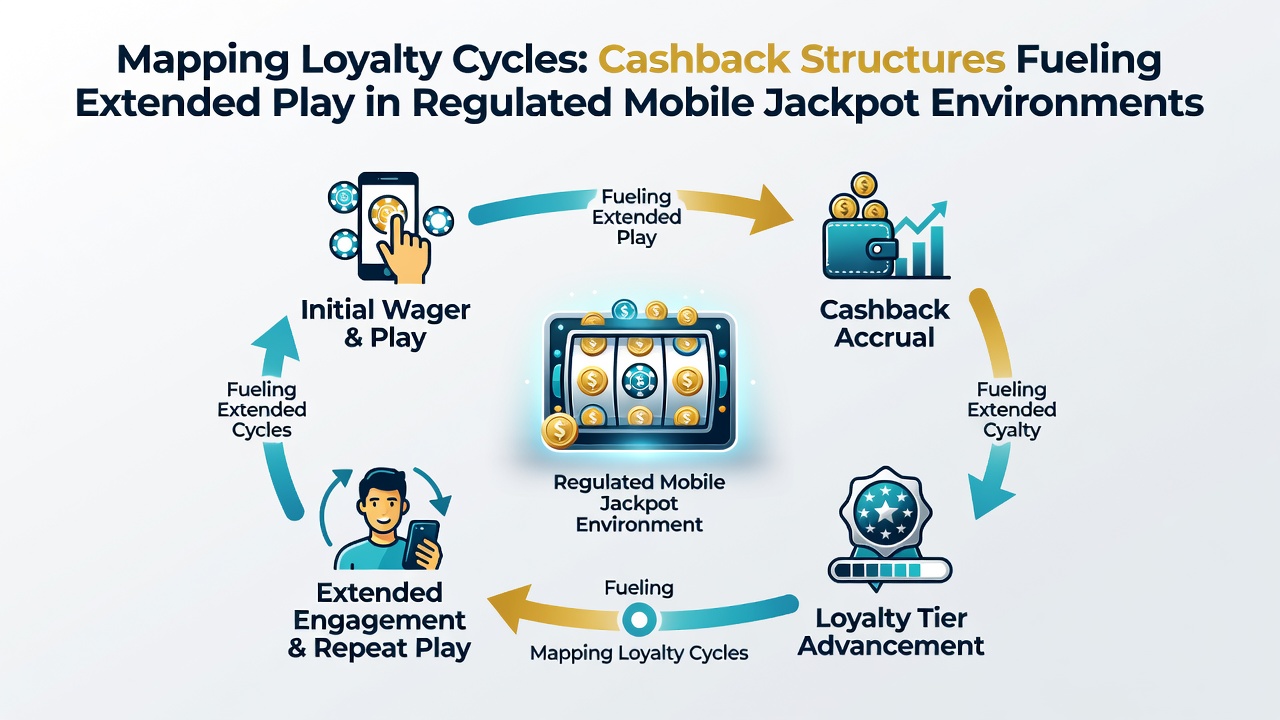
Regulated mobile jackpot platforms use structured cashback mechanisms to form repeating loyalty cycles that extend player engagement across sessions. These cycles operate through automated reward calculations that return a percentage of net losses directly to player accounts, often within the same mobile interface where progressive jackpots accumulate. Operators track these returns via integrated loyalty tiers that adjust cashback rates based on cumulative activity, creating measurable patterns in session length and deposit frequency.
Core Components of Cashback-Driven Loyalty Systems
Cashback structures in these environments typically combine fixed percentage returns with tiered multipliers that activate after specific play thresholds. A base rate of five to ten percent on verified losses applies across all accounts, while higher tiers unlock additional percentages tied to weekly or monthly volume. Progressive jackpot games feed into these calculations because their contribution rates to the prize pool remain consistent regardless of cashback credits issued, allowing operators to maintain prize growth while redistributing portions of losses.
Data from multiple regulated markets shows that players receiving cashback within twenty-four hours of a session demonstrate higher return rates compared with those on delayed payout schedules. Mobile applications facilitate this speed through real-time loss tracking and instant credit posting, which reduces friction between the end of one session and the start of another. The result appears in aggregated platform statistics where average session duration increases when cashback features remain active.
Integration with Progressive Jackpot Mechanics
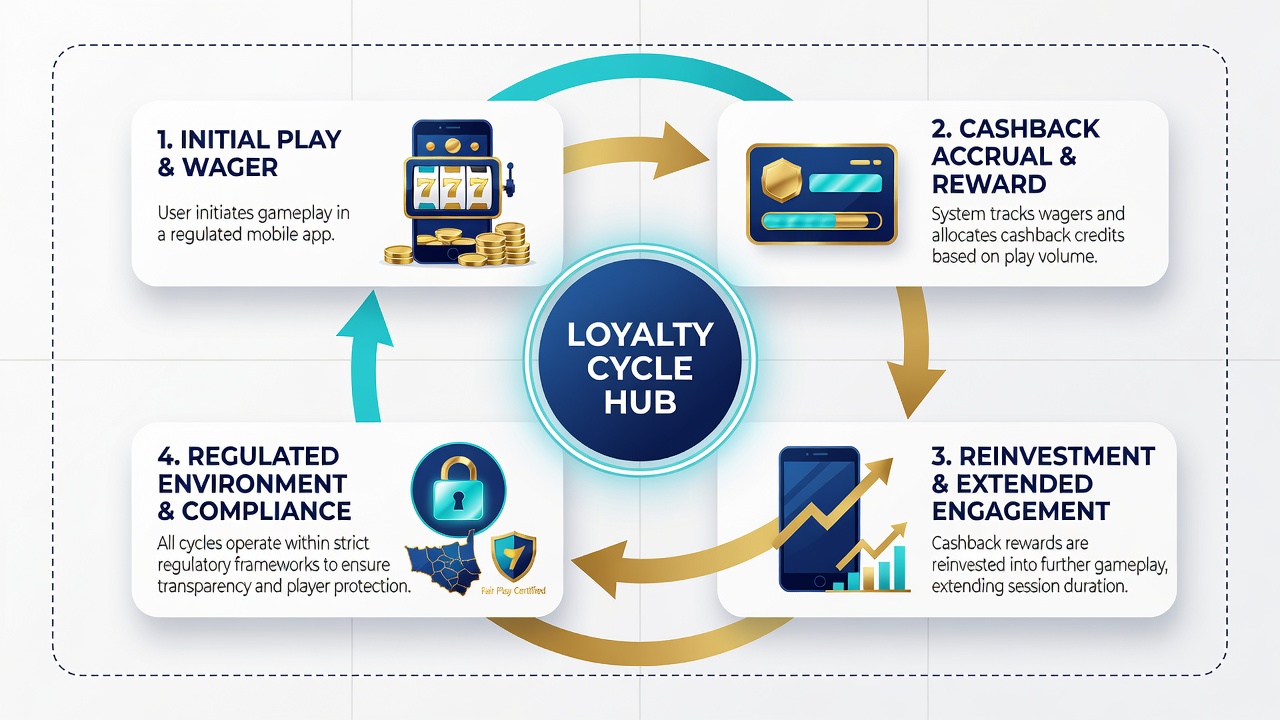
Progressive jackpots on mobile platforms accumulate through fixed contributions from each wager, and cashback programs interact with this model by recycling returned funds back into the same game categories. Players often direct cashback credits toward jackpot-enabled titles because the credits carry no additional wagering requirements in many regulated systems. This directs capital back into the contribution pool, sustaining jackpot growth while extending individual play periods.
Research from academic gaming studies indicates that loyalty loops become self-reinforcing when cashback percentages scale with jackpot contribution levels. A player moving from a standard slot to a progressive title may receive an elevated cashback rate that encourages continued spins, even after initial losses. Observers note that this pattern appears consistently across platforms operating under strict regulatory oversight in North America and parts of Europe.
Regulatory Timelines and Operational Adjustments
Several jurisdictions have scheduled compliance updates for land-based gaming equipment that take effect in July 2026, requiring immediate removal of non-conforming machines. These changes have prompted operators to accelerate development of mobile loyalty tools that replicate land-based retention effects through cashback and tiered rewards. Mobile environments face fewer hardware constraints, allowing faster implementation of dynamic cashback calculations that adjust based on real-time jackpot values.
Industry reports from the American Gaming Association highlight how mobile cashback programs have expanded in markets where land-based adjustments are underway, with operators shifting marketing emphasis toward app-based loyalty features. The transition maintains regulatory compliance while preserving player engagement metrics that previously relied on physical venue visits.
Measurement of Extended Play Patterns
Platform analytics track loyalty cycle effectiveness through metrics such as time between deposits, total spins per session, and progression through jackpot contribution milestones. Cashback recipients show elevated values in these areas because returned funds reduce the perceived cost of continued play. Regulated operators publish anonymized summaries that reveal consistent correlations between cashback frequency and extended jackpot participation, particularly on mobile devices where session portability increases.
One documented case involved a European operator that introduced weekly cashback caps tied directly to progressive jackpot activity. The adjustment produced measurable increases in both average session length and total jackpot contributions without altering base game mathematics. Similar patterns have emerged in Canadian provincial data where mobile platforms report higher retention when cashback structures align with jackpot reset cycles.
Future Mapping of Loyalty Infrastructure
Developers continue refining algorithms that map player behavior against cashback triggers to predict and extend session windows. These systems incorporate jackpot size as a variable because larger prize pools correlate with increased mobile engagement across loyalty tiers. The mapping process relies on anonymized transaction data rather than individual identifiers, maintaining compliance with data protection rules while delivering precise reward timing.
External research groups, including those affiliated with the Gambling Research Exchange Ontario, have examined how cashback timing influences progression through loyalty levels in jackpot environments. Their findings support the view that immediate mobile delivery strengthens cycle continuity compared with manual claim processes.
Conclusion
Cashback structures in regulated mobile jackpot settings create measurable loyalty cycles that extend play through structured returns and tier adjustments. These mechanisms operate alongside progressive jackpot accumulation without disrupting contribution rates, and regulatory timelines such as the July 2026 equipment updates have accelerated mobile adoption of similar retention tools. Data from multiple regions confirms consistent patterns in session extension when cashback integrates directly with mobile jackpot interfaces, providing operators with documented pathways for sustained engagement under existing compliance frameworks.